Queer Places:
Bredgade 19, 1260 København, Denmark
Vejle Øster Kirkegaard, Langelinie 78, 7100 Vejle, Denmark
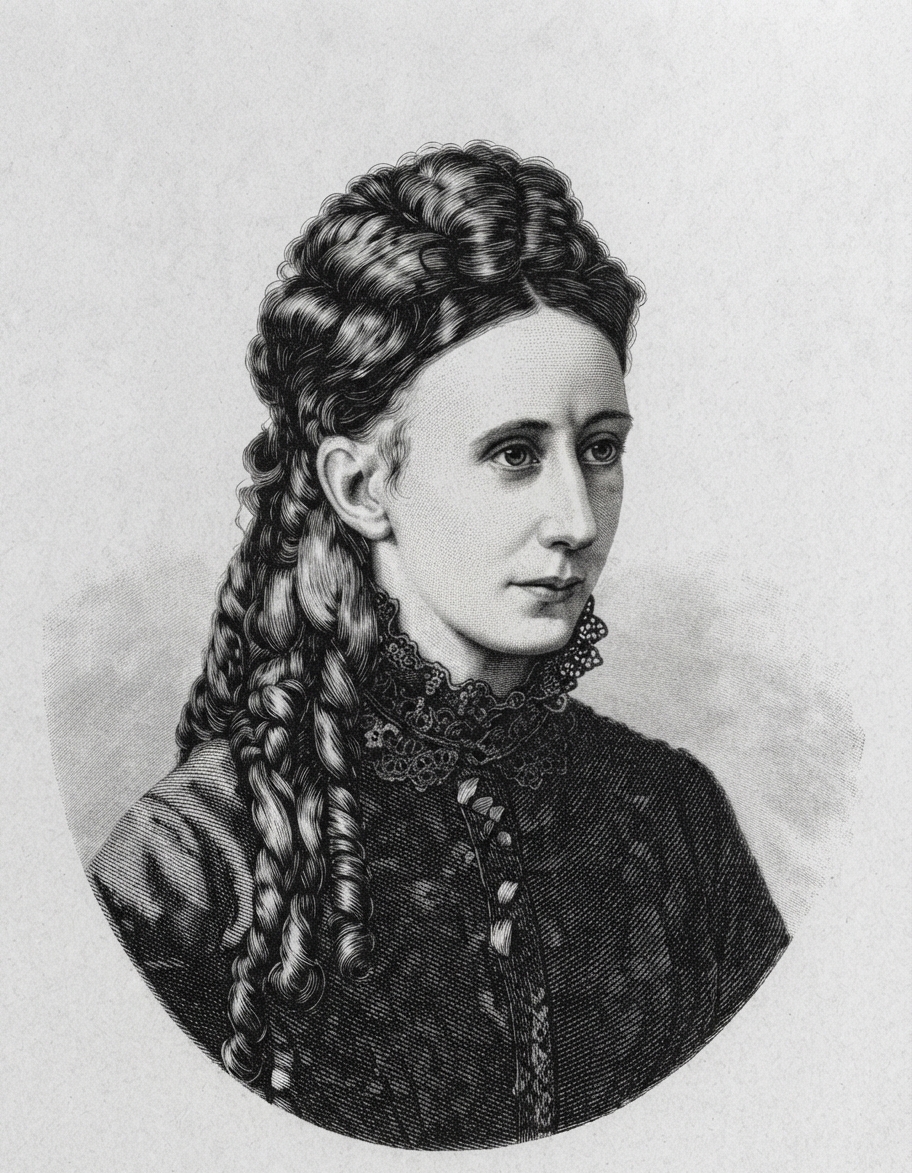 Julie Vilhelmine Kirstine Natalie Zahle (May 20, 1868 – February 28, 1940) was born on May 20, 1868, at Norgesgade 19 (now Bredgade) in Copenhagen,
Denmark, and passed away on February 28, 1940, at Vejle Hospital. She was a Danish writer and teacher whose sparse literary output secured a pioneering
place in Scandinavian queer literary history by containing the first description of lesbian love in Danish literature. Zahle was the daughter of the
radical clergyman and member of the Danish Folketing, Peter Christian Zahle, and Clara Ernestine Emilie Melbye, who passed away in 1868 shortly after her
birth. Because of this early loss, Zahle grew up with her grandparents. Her domestic life shifted further when her father remarried in 1870, and she was
later adopted by the prominent school administrator and publisher Wilhelmine Zahle as her stepmother. In her youth, Zahle briefly studied to be an
actress and took theater lessons, though she ultimately trained to become a teacher.
Julie Vilhelmine Kirstine Natalie Zahle (May 20, 1868 – February 28, 1940) was born on May 20, 1868, at Norgesgade 19 (now Bredgade) in Copenhagen,
Denmark, and passed away on February 28, 1940, at Vejle Hospital. She was a Danish writer and teacher whose sparse literary output secured a pioneering
place in Scandinavian queer literary history by containing the first description of lesbian love in Danish literature. Zahle was the daughter of the
radical clergyman and member of the Danish Folketing, Peter Christian Zahle, and Clara Ernestine Emilie Melbye, who passed away in 1868 shortly after her
birth. Because of this early loss, Zahle grew up with her grandparents. Her domestic life shifted further when her father remarried in 1870, and she was
later adopted by the prominent school administrator and publisher Wilhelmine Zahle as her stepmother. In her youth, Zahle briefly studied to be an
actress and took theater lessons, though she ultimately trained to become a teacher.
In 1891, Zahle entered into her first marriage, which produced a daughter named Gertrud, who grew up to become a dancer and actress. After that
marriage ended in divorce in 1905, Zahle embarked on an unconventional period of life. Accompanied by her daughter and later by her granddaughter, Zahle
traveled extensively across Europe, living in cities like Budapest, Vienna, and Bremen while supporting her family. She married a second time in 1918,
though that union was also short-lived. Upon returning to her independent life, she supported herself primarily through teaching. In her later years, she
occasionally wrote pieces for the weekly press, composed commissioned occasional poetry, and wrote songs performed in private circles.
Zahle's primary claim to literary fame rests on her 1890 collection of short stories titled Vildsomme Veje (Wandering Ways). As the title suggests,
the collection depicts the crossroads in the emerging modern sexual landscape, containing two short stories—"Ogsaa en Kærlighedshistorie" ("Also a Love
Story") and "I Sommerferien" ("During the Summer Vacation")—that focus on young women of marriageable age exploring their eroticism and sexuality prior
to entering conventional marriages. Both short stories feature female protagonists who ultimately end up in marriages of convenience, critically
examining women's limited opportunities under a strict patriarchal system where love and marriage do not go hand in hand.
"Also a Love Story" is the longer narrative in the collection and features the young Martha Grüner, who falls instantly in love with her friend Edith
Gerner, who is five years older than her. Martha's infatuation deepens, but Edith brushes it off, calling it a silly and childish "schoolgirl
infatuation," and when Edith becomes engaged to Ernst Stein, Martha loses the will to live. Throughout the story, Martha questions her own naturalness.
From an ironic narrative position, the narrative voice highlights society's framing of such desires as an unnatural infatuation while simultaneously
giving voice to Martha's inner perspective. When Martha is eventually 'cured' of her infatuation, she is said to have been deprived of her
peculiarity—her sexuality as it was called at the beginning of the story—revealing the concept of the 'natural' to be a social masquerade. In this way,
lesbian sexuality and desire are projected in the story as something transcending constructed laws, reinforced by a character's dialogue questioning
whether there could exist women capable of understanding love solely for someone of their own sex.
Zahle later revealed that the main character, Martha Grüner, was partly autobiographical. As a young person, Zahle had been deeply in love with her
older friend, the actress Agnes Nyrop. In connection with Nyrop's death in 1903, Zahle wrote a type of obituary
describing her stormy youthful infatuation. Years later, while walking as an adult with her daughter Gertrud, Zahle accidentally ran into Nyrop and told
her, "Look, Gertrud, there goes your mother's first love." The second story in the collection, "During the Summer Vacation," follows Valborg, who returns
to her solid grocer after falling intensely in love during a summer stay in a rural rectory idyll, once again portraying marriage not as a union of love,
but as an arrangement based on pure reason.
Vilhelmine Zahle occupies a foundational position in queer Scandinavian literary history. "Also a Love Story" is celebrated as the first explicit
depiction of a young woman's same-sex romantic and erotic attraction in Danish literature. By exploring whether a woman could experience love exclusively
for someone of her own sex with psychological depth and social realism, Zahle broke critical ground, establishing herself as an early and courageous
voice mapping out early lesbian representation decades before the rise of modern organized queer liberation movements.
References:
Other references:
- Lex (Dansk Kvindebiografisk Leksikon / Den Store Danske): Comprehensive biographical and analytical entry on Vilhelmine Zahle authored by literary scholar Dag Heede (Syddansk Universitet).
- Vildsomme Veje (1890): Zahle's primary published work, a collection of novellas originally released by Schous Forlag (with modern reissues by Forlaget Escho, 2024/2025, and digital editions via Saga Egmont).
- Bibliothek for Læger (1891): Early medical and sexological reference where physician Knud Pontoppidan utilized Vildsomme Veje ("Ogsaa en Kærlighedshistorie") in his lecture "Pervers Seksualitet" as an early case illustration of female same-sex attraction.
- Nordisk kvindelitteraturhistorie (1996–1998): Edited by Elisabeth Møller Jensen (published by Rosinante), containing historical analyses of Scandinavian women writers across volumes 2 (pages 363–365).
- Det moderne gennembruds kvinder (1983): Literary study by Pil Dahlerup.
- Kvindelige danske forfattere: Bibliografi over prosa i bogform 1820-1910 (1979): Bibliographical overview compiled by Tiina Hamilton-Nunnally.
- De nye kvinder - Kærlighed og queers 1870-1920 (2025): Recent historical and queer-focused study by Rikke Andreassen and Merete Pryds Helle (Politikens Forlag).
Support this project
This website is a passion project researched, developed, and funded entirely by me. If you find the content valuable and would like to help support the ongoing research and hosting costs, any contribution is deeply appreciated.
Thank you for keeping this independent resource alive!
My books on Amazon: Elisa Rolle's books
BACK TO HOME PAGE
